
Is there a goal you want to accomplish, but you just can’t seem to follow through? Maybe you know exactly what you need to do, but just can’t seem to do it. Perhaps you’re frustrated because you don't know how to build discipline and it's affecting your confidence, career trajectory, health, weight or relationships.
If success could always be achieved by doing something just once, everyone would be successful. However, the truth is anything worth striving for takes time, effort, and a lot of self-discipline in between. While all your effort makes your goals much more satisfying when you reach them, there's no denying the climb is hard.
The secret behind how to be more disciplined is all in the mind. If you’re ready to take your life to the next level but need to learn how to build discipline, keep reading.
If success could always be achieved by doing something just once, everyone would be successful. However, the truth is anything worth striving for takes time, effort, and a lot of self-discipline in between. While all your effort makes your goals much more satisfying when you reach them, there's no denying the climb is hard.
The secret behind how to be more disciplined is all in the mind. If you’re ready to take your life to the next level but need to learn how to build discipline, keep reading.
What Is Self-Discipline?
Self-discipline is defined as the ability to control yourself and make yourself work hard or behave in a particular way without needing anyone else to tell you what to do.”It’s about self-control, willpower, and perseverance. It’s how you get yourself to do what needs to be done to move forward and excel in life.
The Importance of Self-Discipline
Fitness experts, success coaches, doctors, and personal development gurus all stress the importance of how to build self-discipline. It’s a critical factor whether you want to lose weight, procrastinate less, or get promoted.Studies show that those with higher levels of self-control have higher self-esteem, less binge eating and alcohol abuse, better relationships and interpersonal skills, and more optimal emotional responses.[1] Others show that those with self-discipline are more content, satisfied and happy.
Self-discipline is also a sign of commitment to your goals. My grandfather, a successful CEO, taught me the principle of DWYSYWD early on. Backwards or forwards, it means the same thing: Do What You Say You Will Do. It shows that self-discipline does not only help you fulfill to-do's but also shapes your character.
 But of course, you're only human; self-discipline doesn’t mean you're immune to daily distractions and temptations. For those moments, here are some strategies to help stay on course:
How to Be Disciplined for Good
1. Get Motivated
Ever notice when you’re excited about something or have a significant or compelling goal you’re setting out to achieve, you don’t need to know how to build discipline?Let’s say you have your wedding or high school reunion coming up and you want to lose weight to look great and fit into a killer dress. Waking up in the morning for a run and skipping dessert might be a lot easier.
Or, let’s say your dream job just opened up at work, getting to work early, staying late, and keeping on task doesn’t seem so difficult anymore, does it?
“Motivation” comes from the root word “motive.” It’s why you are doing something. Leadership expert Simon Sinek talks about the power of why. Knowing your “why” provides a compelling intrinsic motivation. It fuels the fire and you’re much more likely to stay focused.
You can learn more about the power of why in his TedTalk video:
https://www.youtube.com/watch?v=qp0HIF3SfI4
2. Remove Temptations
Research has proven that our environment affects our choices.[2] For example, one study done at Cornell University found that women who kept soft drinks on their counter weighed 24 to 26 pounds more than those who didn’t, those who kept a box of cereal on the counter weighed an average 20 more pounds than those who didn’t, and those who kept fruit on their counter weighed an average of 13 pounds less.[3]This is not restricted to weight gain alone; your environment can be stronger than your willpower, so ensure your environment is conducive to promote self-discipline in achieving your goals.
 As the saying goes: out of sight, out of mind.
3. Create a Goal, Challenge or Deadline
There’s a reason why influencers have created 5,10 or 30-day challenges. To support you!Challenges work because these focus people toward a goal in a way that compels them to act. Being tasked to do something doesn't necessarily inspire action. But when it's packaged as a challenge, a task becomes both a to-do and a test of your character and strengths—you'd flex your self-discipline to prove to yourself what you're capable of.
You'll be surprised to know that setting good goals can push you to new heights. People have shifted their entire lifestyle, eating habits and motivation by joining these challenges—and these can work for you too!
4. Phone a Friend
In success or failure, it’s always helpful to have an accountability partner. Why else do you think people hire trainers to stay on top of their fitness goals, coaches to achieve their personal or professional goals, or join a club or group such as Weight Watchers?Being accountable to someone for results magnifies the necessary self-discipline to achieve your goals; you're not just making yourself proud, you've got others rooting for you too. Powering through challenges is also much easier when you've got someone you can call when you need a pick-me-up or some inspiration to get out of your funk.
5. Start Small
How do you eat an elephant? One bite at a time!Change is hard and our brains are wired to return to what feels comfortable and predictable. But if you start slow, you can build up to something big without getting overwhelmed.
If you want to start walking 30 minutes a day, five days a week, start with five minutes a day. If you feel like continuing after five minutes, go for it! If you want to start eating better, identify one change you can make in your diet. When your mind thinks it’s going to be easy, it gets you started; use that momentum to keep going.
6. The Carrot or the Stick
Are you compelled by the satisfaction of a reward (carrot) or the risk of punishment (stick)? Or both?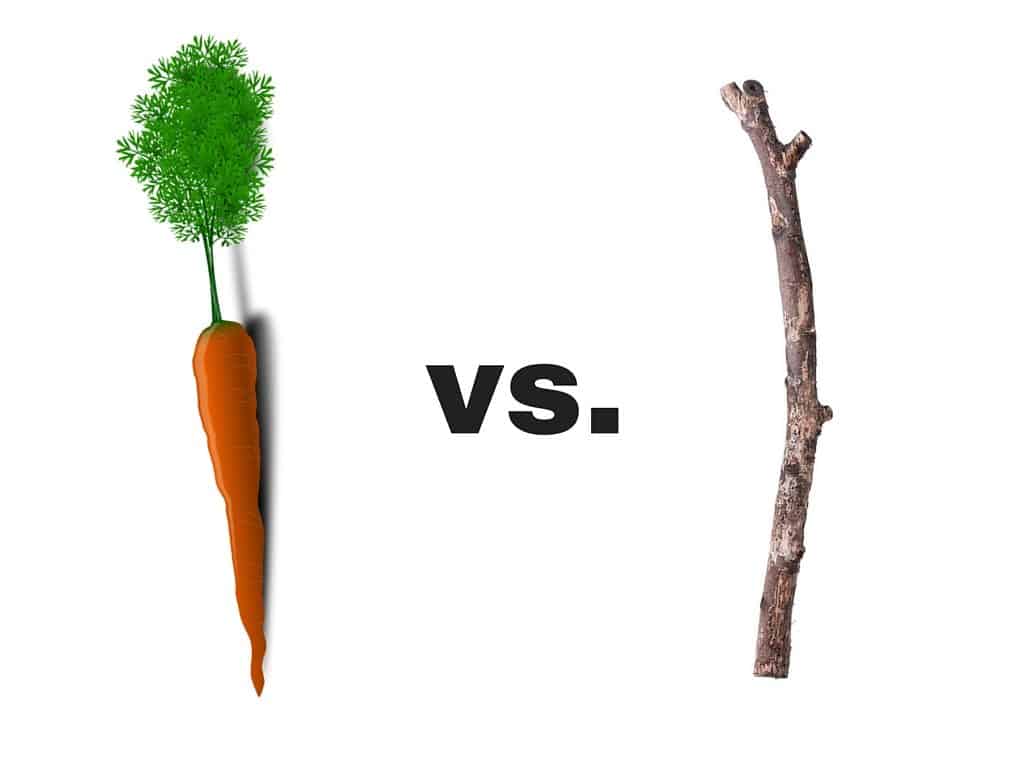 The Carrot. Your team might happily clock in more overtime to land a new client for a boost in their commissions.
What reward can you give yourself for being self-disciplined? Putting a prize up front for doing something difficult may make the task worth it.
The stick. If you’re trying to lose weight, the consequences of poor health may motivate you to change your ways.
If the good things in life fail to push you effectively, fear can be a powerful motivator. Identify the worst-case scenario: what would you lose should you fail to stay disciplined?
7. Stop Going Against the Grain
Perhaps how you are trying to be more disciplined simply doesn't work for how you’re wired. If you always work best waiting until the last minute to study or complete that big project, why are you forcing yourself to try to get it done weeks in advance?If the usual ways how to build discipline aren't working for you, step back and see if it’s important that you do the thing you're procrastinating on or finding hard to follow through with. Maybe you can delegate to someone much better at it.
8. Create Habits and Rituals
Performance Coach, Jay Henderson talks about the power of creating habits and rituals:"Our subconscious is automated, so we only have 5% of our conscious mind to fight the subconscious habits we have built over months, years and, in some cases, a lifetime.To combat that subconscious, we must create new habits.
For example, you want to start running, but find yourself continuing to hit the snooze button. Instead, try listing out very specific steps to help you get up and moving.
For example:
- Step 1: Set the goal to get up and run at 6 am.
- Step 2: Lay out clothes the night before.
- Step 3: Set an alarm and put it on the other side of the room.
- Step 4: Get in bed, turn off the TV, and go to sleep at 10 pm with a mental vision of waking up energized to run.
- Step 5: Wake up the next day, warm up, and start running.
Rituals are another way of being more disciplined because these specifically overcome the force of habit. Focusing and using rituals can help you completely restructure habits and behaviors to achieve more.
9. Put the Big Rocks in First
Legendary time management expert and author Steven Covey first introduced this concept in the ’80s and it’s just as relevant, if not more so today. [4] The idea is that if you do the most important things first, you won’t get distracted by all the little items that can end up mindlessly filling your day.Studies on how to build discipline have shown that willpower is a limited resource.[5] A growing body of research shows that resisting repeated temptations takes a mental toll. Some experts liken willpower to a muscle that can get fatigued from overuse.
This prioritization challenge is a struggle even for the most accomplished executives. Many are bogged down in day-to-day urgencies that they lose the time or mental energy on how to be more disciplined in their jobs.
10. Be Nice to Yourself
Change involves going out of your comfort zone. Don't be surprised if a big part of you is fighting against it. You are going to face setbacks and failures. Don’t allow obstacles to cause you to give up on your bigger vision or goal.Unless you're the most self-disciplined person in the world, you’re going to hit the snooze button and miss a run, you’re going to choose chips over an apple, you’re going to lose your temper instead of keeping your cool. It’s going to happen. Know your worth, forgive yourself and move forward.
Final Thoughts
You’re ambitious, driven, and ready to reach your goals. There will always be a reason you can’t do something, and there’s always a reason you can. This is where a little more self-discipline has the greatest impact on your life and success.It only takes one strategy. One step. One change to move forward. You know how to be more disciplined. You got this.