

Instant Ramen noodles are cheap, quick, and easy to make. What you don’t know is that they are also potentially harmful to your digestive health.


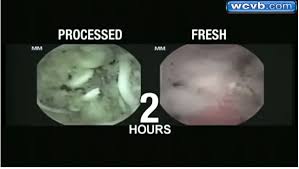
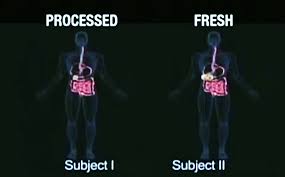
"The most striking thing about our experiment when you looked at a time interval, say in one or two hours, we noticed a processed ramen noodles were less broken down that homemade ramen noodles," noted Dr. Kuo.
After two hours, fresh noodles were almost completely digested, the stomach broke down the noodles as it should. Looking at the instant ramen noodles after two hours showed that they were much less broken down, and almost fully intact. Dr. Kuo recorded 32 hours from the pill camera. "What we're seeing here is a stomach contracting back and forth as it's trying to grind up the ramen noodles," Dr. Kuo said of his experiment.
After two hours, fresh noodles were almost completely digested, the stomach broke down the noodles as it should. Looking at the instant ramen noodles after two hours showed that they were much less broken down, and almost fully intact. Dr. Kuo recorded 32 hours from the pill camera. "What we're seeing here is a stomach contracting back and forth as it's trying to grind up the ramen noodles," Dr. Kuo said of his experiment.

The main preservative in Ramen Instant Noodles is Terriary-butyl hydroquinone (TBHQ). TBHQ is an additive commonly used in cheap processed foods, such as microwave popcorn, wheat thins, and poptarts. The FDA says that TBHQ must not exceed 0.02 percent of its oil and fat content. Small amounts of TBHQ may not kill you or make you feel sick right away, but could potentially have a long term effect on your health such as weakening of organs, and the onset of cancers and tumors.
Unfortunately, Dr. Kuo's study was too small to be conclusive yet, but millions of people are drawing their own conclusion. Processed foods still need to be investigated further, and more research is needed to determine the exact effect on our long term health. It’s best to try to avoid processed foods, as they’re not only harsh on your stomach, but also negatively affect other internal organs.
Unfortunately, Dr. Kuo's study was too small to be conclusive yet, but millions of people are drawing their own conclusion. Processed foods still need to be investigated further, and more research is needed to determine the exact effect on our long term health. It’s best to try to avoid processed foods, as they’re not only harsh on your stomach, but also negatively affect other internal organs.
What’s actually in Ramen noodles?
- Propylene Glycol: a liquid alcohol used to preserve the texture of instant ramen. It’s also used in some tobacco products and… Antifreeze.
- Tertiary-butyl hydroquinone (TBHQ): As noted above, TBHQ is a preservative for the main ingredients in ramen noodles (wheat, flour, salt, and vegetable oil). It’s also found in perfumes, resins, lacquers, and biodiesel.
- Monosodium glutamate (MSG): A sodium salt of glutamic acid that adds a savory taste to foods. It can cause side effects such as nausea, headache, flushing, sweating, and heart palpitations.
- Sodium: One package of instant ramen has 1,875 milligrams of sodium, significantly more than the recommended daily intake of 1500 milligrams!
- Vegetable Oil: Instant ramen can have canola, cottonseed, or palm oil. While canola and cottonseed oils are unsaturated, palm oil is very high in saturated fat.
- BPA: Many types of instant ramen noodles come in Styrofoam cups that contain BPA, and endocrine disruptor. That BPA can leech off o the cup and into the noodles.
- Corn Syrup: Corn syrup is a sweetener, but it’s added t instant ramen to preserve the texture of the noodles. It’s essentially like adding sugar.
 Photo credit:
  Photo credit:


