April 24th, 2008 in Featured, Productivity

8 Ways to Be Ruthless With Your Time

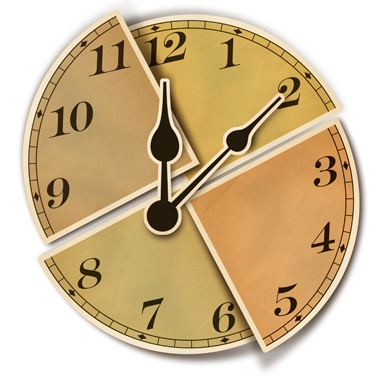
Clock

There are a million and one demands on your time and, whether or not those demands are legitimate, it’s hard to carve out the time necessary to take care of your responsibilities. You have to be ruthless with your time — you have to take care of important tasks before handling issues that just aren’t crucial. You have to set up your own rules for deciding how to spend your time, and those rules may not make everyone around you happy. But you are the only one who can decide what you’ll do today — decide ruthlessly and get your work done.

  1. Say no. Expand beyond what you were told and say ‘no’ to any requests on your time that don’t actually move your work along. You can be nice about it, but avoid taking on new projects. I know that you’re thinking that you can’t just going around telling everyone that you aren’t going to help them, and, sure, if you have some time to spare, there isn’t anything wrong with lending a helping hand. But your work must come before helping others.
  2. Stop hitting snooze. I will struggle with my alarm clock until the day I die. But giving in to the temptation of the snooze button will only lose both you and I precious time. It’s a bad habit to start, and a hard one to stop. As long as you are getting enough sleep, though, you need to get up when the buzzer goes off. If you need another hour in the day, why would you spend an hour dozing in bed after your alarm’s gone off?
  3. Procrastinate. In fact, I suggest that you procrastinate shamelessly. As a freelance writer, I make a point to work on projects in the order of their due dates. This means that I’m often finishing up projects hours or even minutes before they’re actually due. It also means that I don’t have to worry about incorporating last minute changes — because I can do it the first time around. I’ve had plenty of projects canceled midway through, as well. If I procrastinate, I can avoid wasting my time on work that I might not get paid for.
  4. Put big tasks first. Get your biggest task or project done first thing in the morning. You’ll need the most time in your day for the big projects. Small tasks (even if they’re important) can be done in the fifteen minutes between meetings or waiting for the bus. Develop your ability to estimate how long a task will take you: do you need to sit down and spend some time to get it done? Or can you do it on your way to your next stop?
  5. Leave early. If you can get somewhere even a few minutes early, you’ll probably have to wait — which is a waste of time, right? Wrong! Remember those small tasks you want to get done today, but haven’t gotten to yet? Make use of those few valuable minutes to return a phone call, write a memo or plan out tomorrow. You may need to drag along a few office supplies — I keep a notebook and pen with me at all times, personally — but you’d be surprised what you can get done. If it’s a nice day, consider just sitting in your car with the windows down. You’ll even get the benefit of a little extra fresh air.
  6. Ignore irrelevancies. As painful as it is to turn off your email for even a few minutes, it’s probably not relevant to the project you need to be working on right now. Be ruthless with yourself and turn off your email and other distractions (instant messenger, phone and anything else). You can always respond later — and if it’s a real emergency, like the building is burning down around your ears, somebody will probably come in to your office to let you know.
  7. Stay aware. At about two o’clock each afternoon, I feel like the only thing I want to do is take a nap. But I know that I can make myself more aware — enough, at least, to concentrate on my work — by taking a walk out in the fresh air and downing a soda. Keeping yourself focused is key to getting a project done and over with: if you’re less than aware of what you’re working on, you not only run the risk of making a mistake, you’re also likely to take much longer to finish your project. And the more time, you spend on a particular task, the less time you have for every other thing you want to do today.
  8. Plan your day. While you may need to have a flexible plan for your day, you still need an outline of the day. List what you absolutely must get done today, what meetings you have planned and any other notes you’ll need for the day. While you don’t have to be strict to the point of refusing to do anything not on your plan, having an actual schedule for your day can help you to be ruthless with others’ requests on your time: “I’d love to help you out, Jane, but I’m completely scheduled today.”

Just as you have to be ruthless in how you handle how much responsibility, you have to be ruthless in making sure that you get your own work done. You can’t tell yourself that you’ll only slack off this one time, because one time becomes two, then three, then enough that you’ll be wondering where all that free time you used to have went.

WRITER'S BIOGRAPHY

Thursday Bram

Thursday Bram blogs about a variety of topics, from personal finance to small business. She is the author of an upcoming book on the tools and tricks you need to build a career you can take with you during long-term travel. More information about Thursday and her book, Working Your Way Around the World, is available on her personal site, ThursdayBram.com.

ARTICLES BY THIS WRITER »
Don't want to miss any related posts like there? Subscribe to our feed!

Comments

  • Ann says on April 24th, 2008 at 10:39 am

    It’s amazing to me how often I get to the middle of the afternoon and realize I’ve done nothing on my list.

    I’m wondering if I need to develop a “large print” format To Do list and post it right in front of my nose . . . I often forget to even look at my list once the day gets rolling.

    A former boss of mine used to say: “Plan Your Work and Work Your Plan” – good advice!

  • Charlie Gilkey says on April 24th, 2008 at 11:38 am

    Great post, Thursday. I like how you included saying no as the first one; for some reason, even though we already can’t complete the commitments we currently have, we continue to take on more. Holding the line on projects can make a world of difference.

    Turning irrelevancies off is key, as well. My main problem now is that I’ve included too much reference information in my email Inbox, so I have to have the program open to reference that – and then I “quickly” check my email. Quickly turns out to not be so quick.

    I’ve written a post on Heatmapping Your Productivity that applies many of the things you list. Some may find it useful, as it looks not only at time, but the quality of productive time available.

  • Peter Knight says on April 24th, 2008 at 5:31 pm

    This is on target. “Procrastinating” got redefined by efficiency gurus in my old field of engineering as “JIT”- Just In Time. I found that I’d been using it for years. As to mapping out the day, I think keeping a handwritten journal and revising the day’s ‘To Do’ first thing, works well.
    Awareness seems sharpest somewhere close to lunch time and declines for me through to about late afternoon.

    Good post! As always – sorry I missed your PM session today.

    Peter

  • Via says on April 24th, 2008 at 7:14 pm

    Nice list for me — thanks. Concise and golden.

    My little motto above my computer reads:
    “Gracious with people, ruthless with time”.

    But I’ve got a very long way to go b4 I am consistent with both ends of that ;)

  • Torley says on April 24th, 2008 at 8:25 pm

    I enjoyed this article! Some people don’t do these things out of fear that they might not appear “nice”, but that only ends up stressing them more, making them grumpy and building up a type of “compounded unhappiness interest”.

    It’s important to gauge the value of what you’ll get in return for doing something: again, this is something to be celebrated, not feared, because once you lose time… you don’t get it back.

    I advocate procrastination when it’s done to ignore/delay those things that won’t advance the quality of your life, be it personal relationships or professiona goals.

    Being a friendly person AND being brutally efficient can be mutual!

  • MrAchievement - Stanley Bronstein says on April 24th, 2008 at 10:38 pm

    The best way I’ve learned to avoid wasting time is to just get things done. Don’t ask how you’re going to do it. Don’t ask when you’re going to do it.

    Just do it!

    That’s what I did in law school. For the first 7 weeks, I was overwhelmed. I didn’t know how I was going to get everything done.

    After 7 weeks, I stopped asking and I just started doing. That’s what worked for me.

    MrAchievement
    Stanley Bronstein
    Attorney, CPA, Author, Blogger & Professional Motivational Speaker

  • Provi says on April 25th, 2008 at 4:10 am

    Totally agree!

  • Tickled By Life says on November 30th, 2008 at 2:42 am

    nice list!
    for me what works best is deciding what NOT to do today! I try and do this every morning :-)

Post your comment

Continue your discussions at Lifehack Community.

Get your own Avatars at Gravatars.
Three FREE Audiobooks RISK-FREE from Audible
Recent Writers SEE MORE
Latest Poll

Do you like the new design?

View Results

Loading ... Loading ...