
Two out of three full-time employees in the United States don't believe they have work-life balance. Over half say they've missed important life events because of work.[1] Globally, only 21% of employees are engaged at work, while 44% report burnout.[2]
If you're looking for work-life balance tips, you've probably already tried the standard advice: set boundaries, unplug after work, prioritize self-care. And it probably hasn't worked - at least not for long.
Here's why: the concept of "balance" is the problem. When you frame work and life as two sides of a scale, every gain on one side is a loss on the other. You're not managing your life - you're managing a constant trade-off.
I learned this the hard way. I built LifeHack while pouring everything into my work. I couldn't sleep, my back was in constant pain from stress, and I had no energy for anything outside of work. The standard work-life balance tips didn't help because I was solving the wrong problem. What changed everything wasn't better balance - it was alignment.
If you're looking for work-life balance tips, you've probably already tried the standard advice: set boundaries, unplug after work, prioritize self-care. And it probably hasn't worked - at least not for long.
Here's why: the concept of "balance" is the problem. When you frame work and life as two sides of a scale, every gain on one side is a loss on the other. You're not managing your life - you're managing a constant trade-off.
I learned this the hard way. I built LifeHack while pouring everything into my work. I couldn't sleep, my back was in constant pain from stress, and I had no energy for anything outside of work. The standard work-life balance tips didn't help because I was solving the wrong problem. What changed everything wasn't better balance - it was alignment.
Why Work-Life "Balance" Doesn't Work
Most work-life balance tips assume you need to divide your time more evenly between work and personal life. But that framing creates an impossible choice: every hour spent on one side feels stolen from the other.When people think "work" versus "life," they unconsciously encode work as suffering and life as enjoyment. But there's no balance if everything related to work is negative while your personal life strains under unrealistic expectations of being the antidote.
The true goal isn't to split positive and negative evenly. It's to stop splitting yourself in two.
Most people try to compensate for negativity at work by making everything positive outside of it:
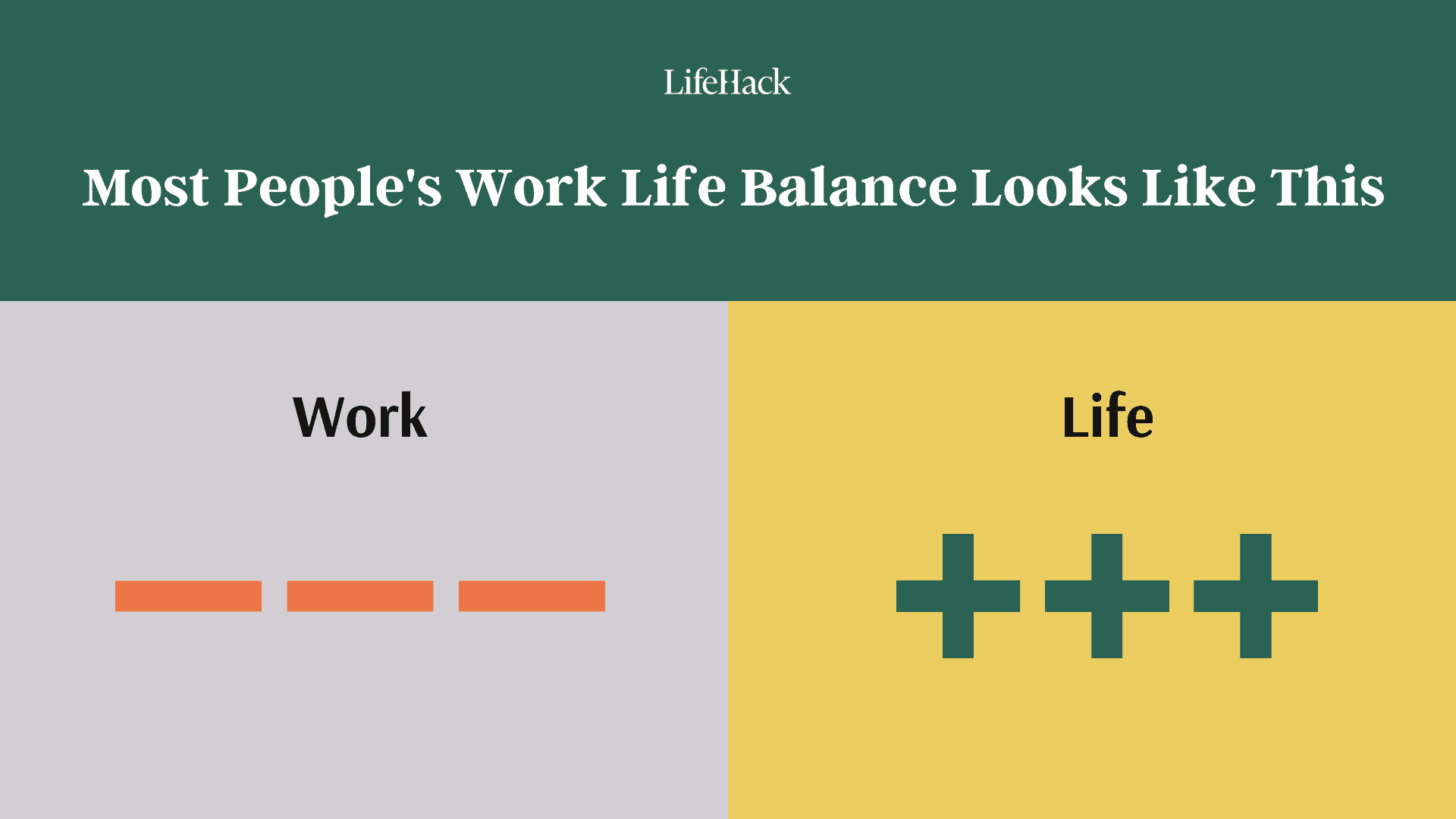 This doesn't work. If everything is negative at work, performance suffers, creating more negativity. And leaning on personal life for all your happiness puts unsustainable pressure on relationships and rest.
Others try the reverse - bringing positivity into work while neglecting their personal life:
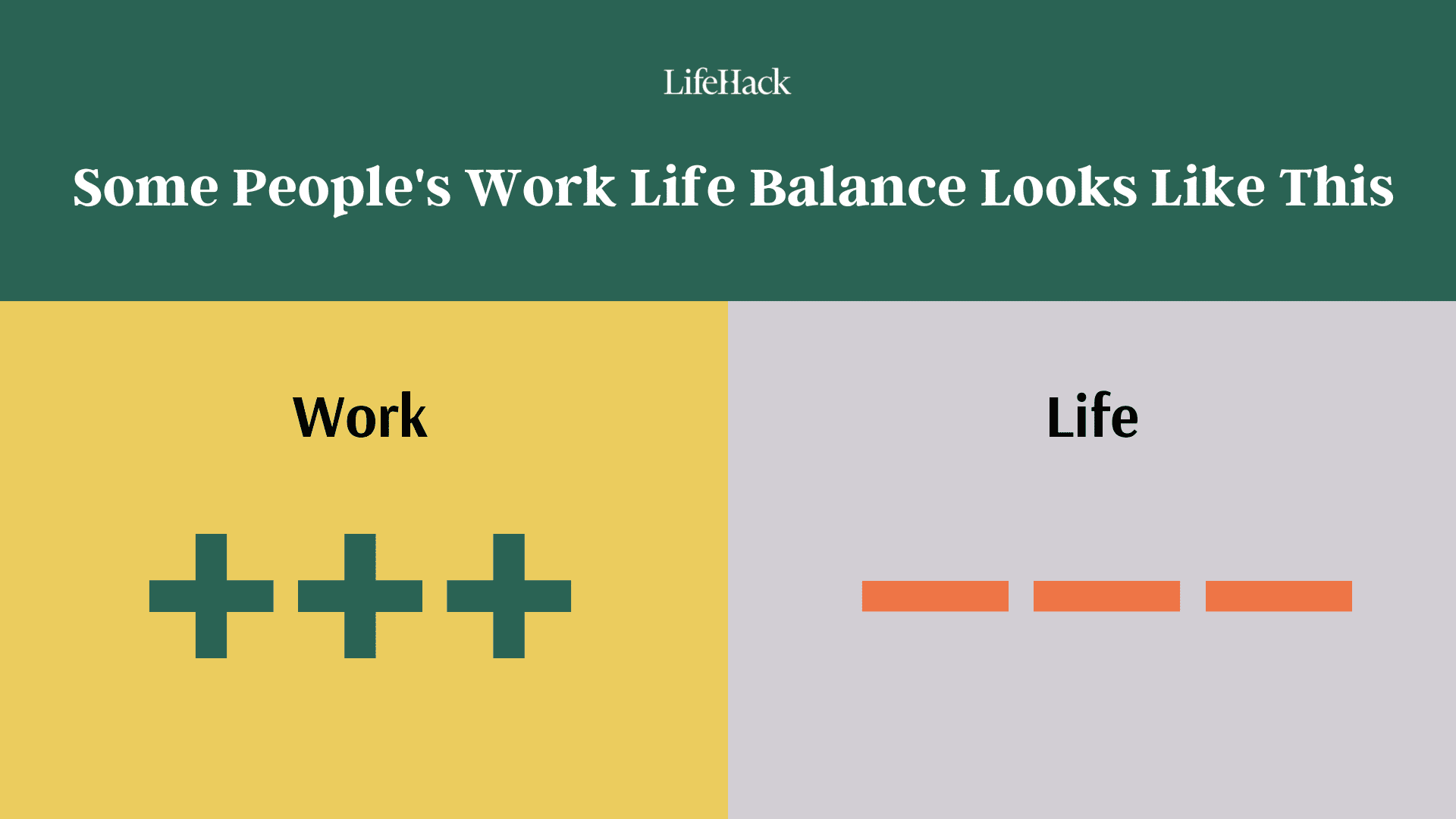 This was me. I loved my work so much that I gave it everything. But with no energy left for self-care, my health declined and started undermining the very work I was prioritizing.
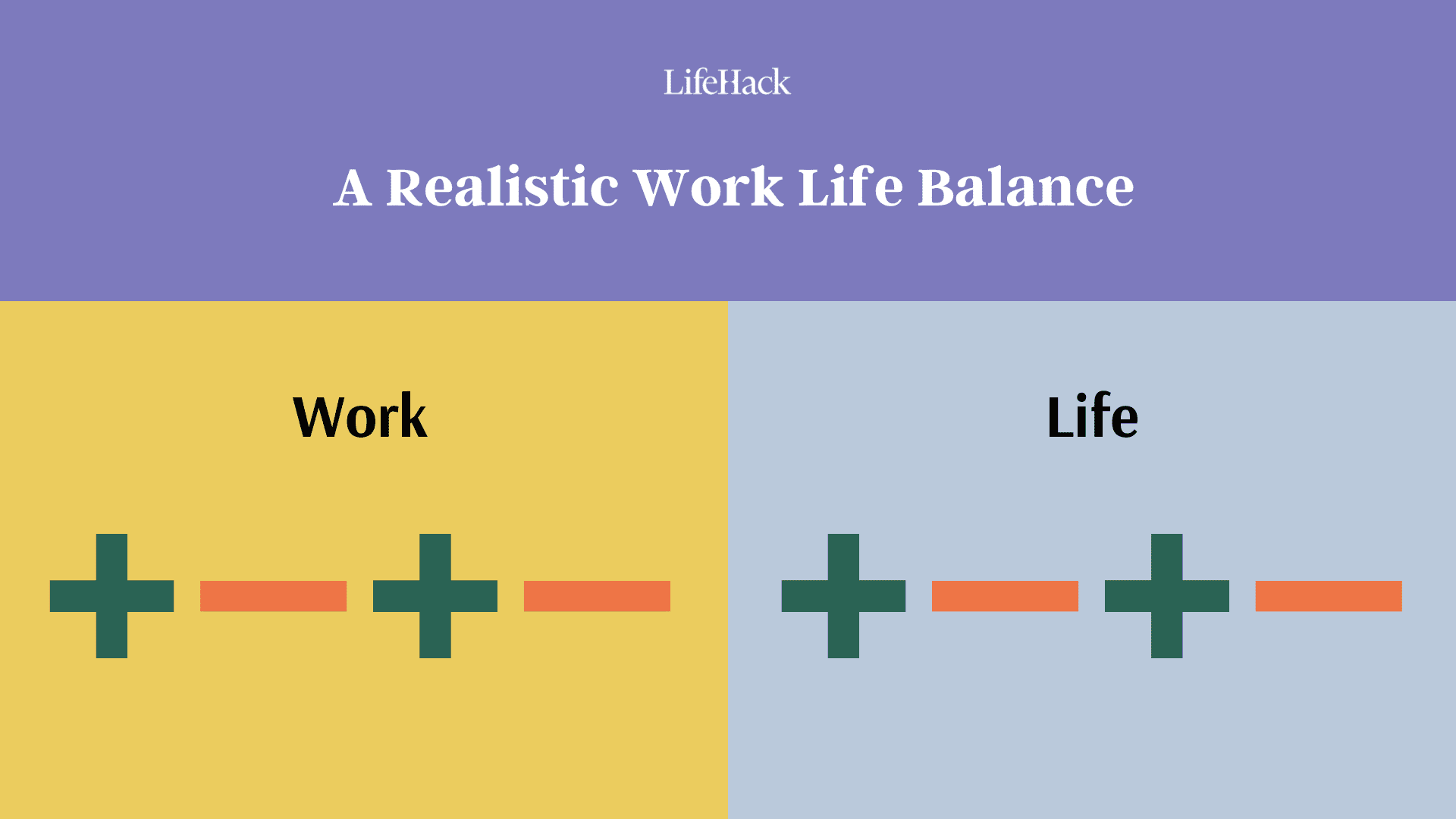
The rare few who experience positivity on both sides look like this:
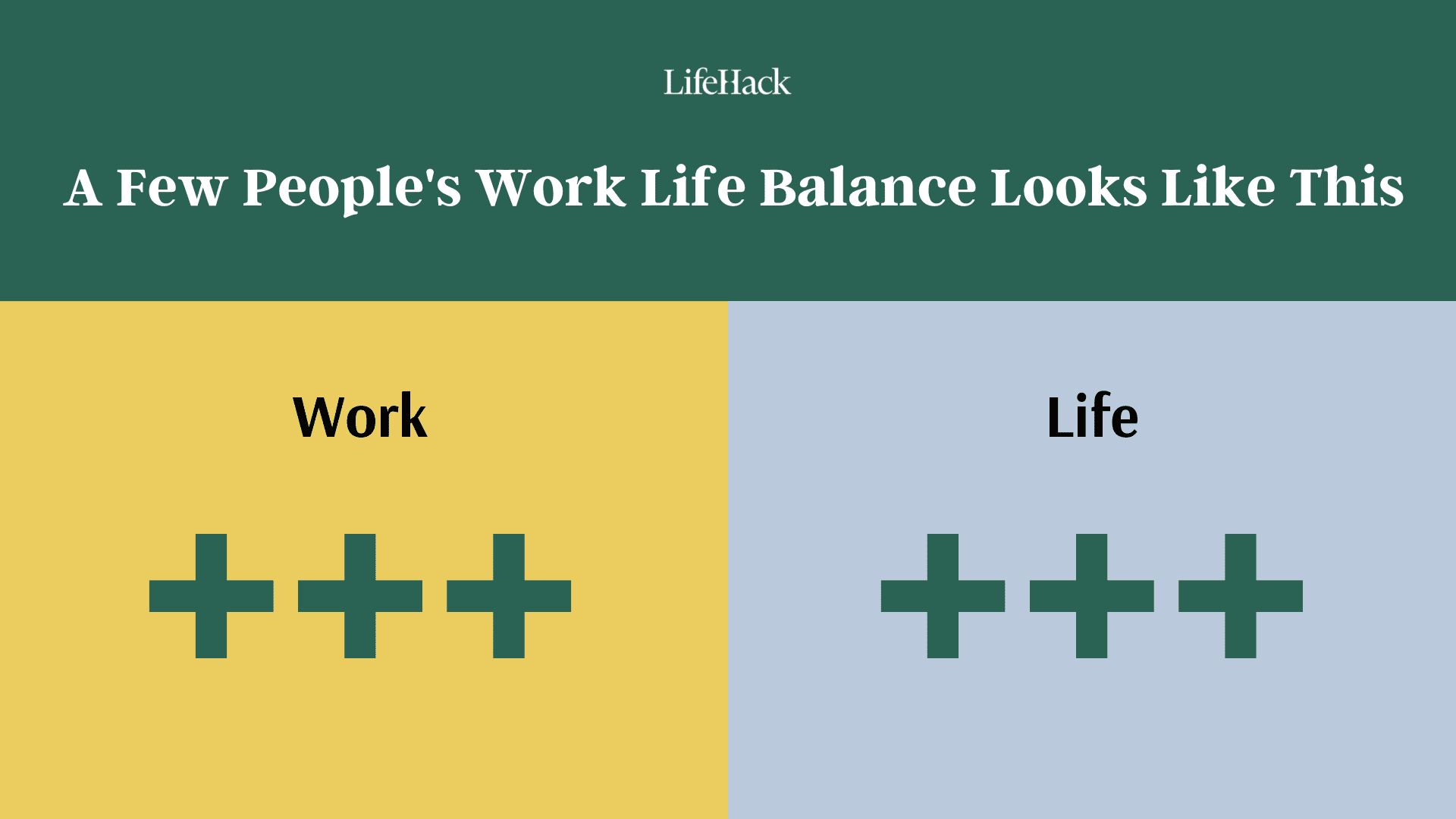 That's less than 5% of people. If you're in the other 95%, the solution isn't better balance. It's a different framework entirely.
The Alignment Framework: A Better Approach to Work-Life Balance
The solution is to recover a sense of unity within yourself. Instead of separating work and life into competing categories, align them around what you actually value.Ask yourself one question: Why do I do what I do - in life and at work?
Your answer to this question forms your blueprint for a unified self. It's charged with meaning that connects directly to who you are and what you care about.
Research supports this shift. A 2023 systematic review of 51 studies found that "work-life blending" - where values and identity flow across both domains rather than being rigidly separated - produces better outcomes than traditional balance models.[3]
This framework is called alignment, not balance. And it reveals several things:
- Some aspects of your work aren't suffering. Look again, and you'll notice positive aspects that reflect your interests. You might value creativity and recognize opportunities to use it daily at work.
- What you care about at work is what you care about in life. You might value friendship in your personal life and demonstrate that same value with coworkers. Your values are present in all your interactions.
- Work and personal life complement each other. The generosity you show friends builds better client relationships. The problem-solving you do at work helps you overcome personal obstacles.
 Not perfect on either side - but aligned. And that made all the difference.
Your alignment blueprint can also reveal when something is off. If you're dissatisfied with your job, the blueprint shows what isn't aligned with your values. If you're a workaholic, it shows that what you dismissed as "off-mode" - relaxing, pursuing hobbies, spending time with family - actually contains values that support and enhance your working life.
7 Work-Life Balance Tips That Actually Work
With alignment as your foundation, these practical tips become significantly more effective. Each one is designed to reinforce alignment rather than just manage a trade-off.1. Define Your Non-Negotiables
Before optimizing your schedule, get clear on what you will not compromise. For some people it's dinner with family every night. For others it's a morning workout or an uninterrupted creative block. Non-negotiables aren't about time management - they're about values management. Write down three things that, if you skip them consistently, signal that something is misaligned.2. Set Boundaries That Stick
Boundaries fail when they're arbitrary rules. They stick when they're connected to your alignment blueprint. "I stop working at 6pm" is a rule. "I stop working at 6pm because evening time with my family is how I live my values" is a boundary with purpose. Establish a dedicated workspace, set clear start and end times, and communicate these to your team - not as restrictions, but as commitments.3. Audit Your Time Weekly
Track how you spend your time for one week. Most people are surprised by what they find. You might discover that "work" includes two hours of busywork that doesn't align with anything meaningful, while activities that matter - exercise, deep work, relationships - are getting squeezed. A weekly audit helps you reallocate time toward alignment, not just efficiency. If you want a structured approach, try LifeHack's Time Assessment for a personalized report.4. Design Your Environment for Focus
Willpower is finite. Stanford research shows that productivity per hour collapses after 50 hours of work per week - and at 70 hours, you produce no more than you would at 55.[4] The more decisions you make throughout the day, the harder it gets to resist distractions. Instead of relying on discipline, redesign your environment: block distracting websites before work starts, put your phone in another room during family time, keep your running shoes by the door. When the right behavior is the easy behavior, you don't need to choose between work and life - the environment chooses for you.5. Disconnect Deliberately
"Unplugging" sounds simple until you realize that 65% of remote workers are working longer hours than ever. The fix isn't willpower - it's ritual. Create a transition ritual that signals the end of work: close your laptop, change clothes, take a walk. The physical action creates a psychological boundary. And when you're off, stay off. Checking one email "quickly" reactivates work mode and undermines recovery.6. Invest in Recovery, Not Just Rest
Scrolling your phone on the couch isn't recovery. Real recovery is active: exercise, hobbies, meaningful conversations, time in nature. These activities don't just rest your brain - they replenish the specific mental resources that burnout depletes. Studies consistently show that work-life imbalance leads to cardiovascular disease, poor sleep, depression, and anxiety.[5][6] Treat recovery as a non-negotiable, not a luxury.7. Check Alignment Quarterly
Life changes. What aligned last year might not align now. Every quarter, revisit your blueprint: Why do I do what I do? Has anything shifted? Are you spending energy on things that no longer match your values? This isn't a productivity review - it's a values review. Sometimes the answer is to adjust your habits. Sometimes it's to have a conversation with your manager. Sometimes it's to make a bigger change.Why Work-Life Balance Matters More Than You Think
The cost of ignoring work-life balance goes far beyond feeling stressed.Research shows that work-life imbalance significantly harms employee performance and productivity.[7] The damage extends to every area of life.[8]
Long working hours increase the risk of coronary heart disease and stroke.[5] Chronic imbalance can lead to burnout - physical, mental, and emotional exhaustion.[9] And it strains the relationships that matter most - leaving you too tired or too stressed to be present with the people you care about.[10]
People with a healthy life balance experience less stress, better physical and mental health, stronger relationships, and more sustained motivation. The work-life balance tips above aren't just lifestyle advice - they're health advice.
Frequently Asked Questions
What is a good work-life balance?
A good work-life balance isn't a perfect 50/50 split between work and personal time. It's alignment - a state where your daily actions across both work and life reflect what you genuinely value. When you feel energized rather than drained by the overall pattern of your days, your balance is healthy. The specifics look different for everyone.How do I improve my work-life balance as an employee?
Start with your non-negotiables: identify the 2-3 things you won't compromise on (family dinner, morning exercise, creative time). Then set boundaries that protect those commitments. Audit your time weekly to catch drift. And most importantly, check whether your work aligns with your values - if it fundamentally doesn't, no amount of boundary-setting will create balance. You may need to explore work-life integration vs balance as a framework.What are the signs of poor work-life balance?
Watch for: constantly working long hours, feeling guilty when not working, neglecting personal relationships, physical or mental exhaustion, and struggling to disconnect during off-hours. If any of these are persistent, your balance needs attention. The alignment framework above can help you identify what specifically is misaligned.Is work-life balance realistic?
Perfect balance - where both sides feel equally positive all the time - isn't realistic for 95% of people. But alignment is. When your work and personal life share underlying values and complement each other, the need for a strict "balance" diminishes. You stop seeing work as something you need to escape from and life as something you need to protect from work.The Bottom Line
The best work-life balance tips aren't about dividing your time more carefully. They're about aligning your time with what actually matters to you.Stop chasing a 50/50 split. Start asking: Why do I do what I do? Use that answer as your compass for every decision about how you spend your time - at work and beyond.
If you want to see where your alignment gaps are, take LifeHack's free Time Assessment and get a personalized report on how to balance life and work in a way that fits you.